



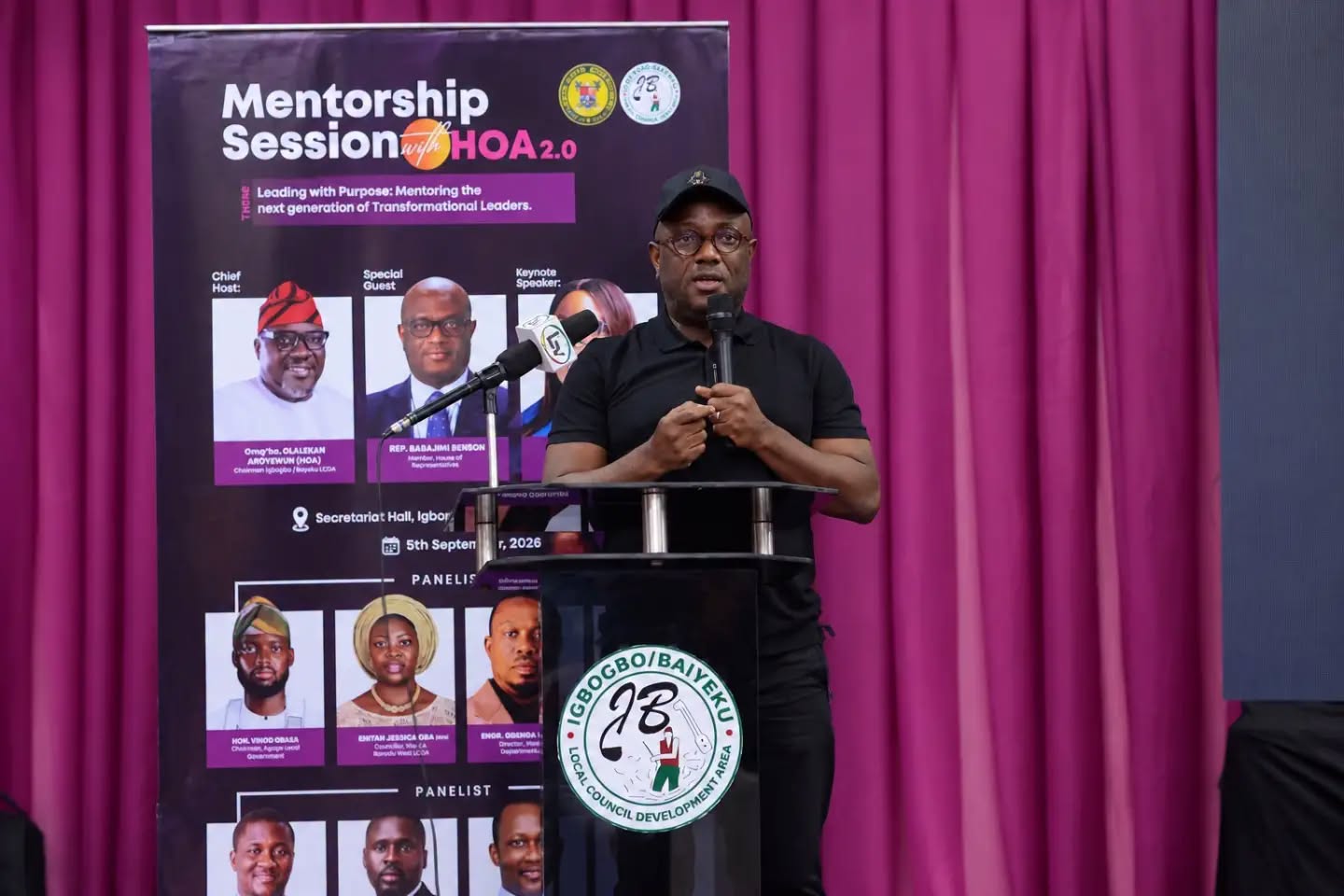
Leadership in public office is ultimately measured not only by speeches, titles or political visibility, but by the extent to which public service translates into tangible opportunities, support and improved quality of life for the people.
In Ikorodu Federal Constituency, the public record of Rep. Babajimi Adegoke Benson presents an interesting case study in sustained legislative representation and constituency engagement. Since entering the House of Representatives in 2015, Benson has combined his responsibilities at the National Assembly with a sustained focus on programmes and interventions directed at the people of his constituency.
His record has also attracted national recognition. In 2025, THISDAY recognised him as Representative of the Year, while the newspaper also published a feature examining his political and legislative career.
Beyond awards and recognition, however, the more important story is the pattern of service that has developed over the years.
From Representation to Service
One of the defining features of Benson’s approach has been the effort to maintain a connection between legislative representation and the everyday realities of his constituents.
His constituency interventions have touched areas including education, healthcare, youth development, entrepreneurship, infrastructure and social support. His legislative and constituency records also point to sponsored legislation, educational interventions, healthcare initiatives, skills-development programmes and infrastructure projects.
This reflects an important understanding of public representation: a legislator operates at the national level, but the people who elected that legislator continue to experience very local challenges.
Effective representation, therefore, requires both participation in national policymaking and an understanding of the needs of the communities being represented.
The iCare Foodbank and the Power of Consistency
Perhaps one of the most distinctive examples of sustained community engagement associated with Benson is the iCare Foodbank.
Since its establishment, the initiative has provided food support to vulnerable members of the community, including elderly people, widows and households facing economic difficulties. What makes the initiative particularly noteworthy is its reported continuity, with food distributions taking place regularly over the years.
The deeper lesson is not simply about the distribution of food. It is about consistency.
Public service can easily become defined by occasional gestures—a project commissioning, an empowerment event or a one-time distribution of assistance. Sustained intervention creates something different: a continuing relationship between leadership and community.
The iCare Foodbank therefore provides an example of how a leader can institutionalise compassion and make social support a recurring part of constituency engagement.
For aspiring leaders, this offers an important lesson: impact is not always created by the size of a single intervention; sometimes it is created by the consistency with which service is delivered.
Investing in People, Not Only Projects
Another notable aspect of Benson’s constituency engagement is the attention given to people as beneficiaries of development.
Reports have documented support for law graduates from Ikorodu, helping them meet some of the financial demands associated with their professional development. There have also been interventions directed at market traders and small-business owners through financial assistance and empowerment initiatives.
Such programmes illustrate a broader understanding of development.
Infrastructure remains important. Roads, schools, healthcare centres and other public facilities are essential to community progress. But communities are ultimately built by people, and investing in their education, skills, businesses and professional aspirations is equally important.
A young graduate who receives assistance at a critical stage of professional development, or a trader who receives support to strengthen an existing business, represents a different kind of constituency intervention—one that seeks to strengthen individual capacity.
Opening Ikorodu to the World
In an increasingly interconnected world, constituency representation can also mean creating access to opportunities beyond one’s immediate environment.
Benson’s constituency engagement has included reported opportunities connected with international educational and exchange programmes involving China.
For young constituents, such opportunities can provide exposure to different educational systems, cultures, technologies, professional networks and ideas.
More importantly, international exposure can produce benefits that extend beyond the individual participant. When beneficiaries return with new knowledge, skills and relationships, those experiences can potentially contribute to the wider community.
This is an important dimension of contemporary leadership: connecting local talent with global opportunities.
Creating a Bridge Across Generations
A constituency is never made up of a single generation or social group.
Older residents have their own needs. Young people require education, employment, skills and opportunities. Entrepreneurs need access to capital and markets. Professionals require platforms and networks. Traditional institutions and community leaders carry experience, history and institutional memory.
A leadership model that recognises these different constituencies is better positioned to understand the complexity of community development.
Benson’s interventions, taken collectively, reflect engagement across several of these groups.
This generational dimension is particularly significant in Ikorodu, a community experiencing considerable population growth and social transformation. Connecting established institutions and older generations with young people and emerging professionals is increasingly important to ensuring that development remains inclusive.
Legislative Work and Constituency Development
It is also important to distinguish constituency interventions from the core constitutional responsibilities of a legislator.
Members of the House of Representatives are expected to participate in lawmaking, representation and oversight. Constituency projects and interventions should therefore complement—not replace—the legislative responsibilities of elected representatives.
Benson’s legislative career has included committee responsibilities and sponsorship of bills and motions covering various areas of national development. He currently serves as Chairman of the House Committee on Defence.
The combination of national legislative responsibilities and grassroots constituency engagement provides an interesting framework for examining modern political representation.
It raises a fundamental question for anyone aspiring to public office:
What should people experience because you have been entrusted with the responsibility to represent them?
What Aspiring Leaders Can Learn
Benson’s record offers several principles that aspiring leaders can examine:
- Consistency: Sustainable impact requires more than occasional interventions. Long-term programmes can build continuity and trust.
- People-centred leadership: Development should include investment in people through education, professional support, entrepreneurship and employment opportunities.
- Broad-based engagement: A constituency comprises different generations, professions and socioeconomic groups, each with distinct needs.
- Connecting local talent to global opportunities: International exposure can expand the educational and professional horizons of young people.
- Balancing legislation and grassroots engagement: National legislative responsibilities can exist alongside meaningful constituency representation.
- Building for the next generation: Good leadership should not only address today’s challenges but also expand opportunities for those who will inherit the community tomorrow.
A Legacy Built Through Continuity
The most instructive feature of Benson’s public record may not be any single project or intervention. It is the pattern of engagement across different areas and over an extended period.
From the iCare Foodbank and support for vulnerable residents to assistance for graduates and market traders; from educational and healthcare interventions to international opportunities for constituents, the breadth of his constituency activities illustrates different dimensions of community-focused representation.
His recognition as THISDAY Representative of the Year in 2025 provides an important external acknowledgement of his legislative and constituency activities. But beyond awards, the more enduring measure of public service is what remains with the people: the opportunities created, the lives touched, the institutions strengthened and the possibilities opened for the future.
For aspiring leaders, the lesson is straightforward.
Leadership is not merely about seeking a position; it is about developing a philosophy of service and demonstrating that philosophy consistently.
In Ikorodu Federal Constituency, Babajimi Benson’s years in public office provide one example of how legislative responsibility can be combined with sustained grassroots engagement—and how a leader can seek to build bridges between generations, professions, communities and opportunities.
Ultimately, the most meaningful legacy of public office is not the office itself. It is the difference people can point to because you served.