

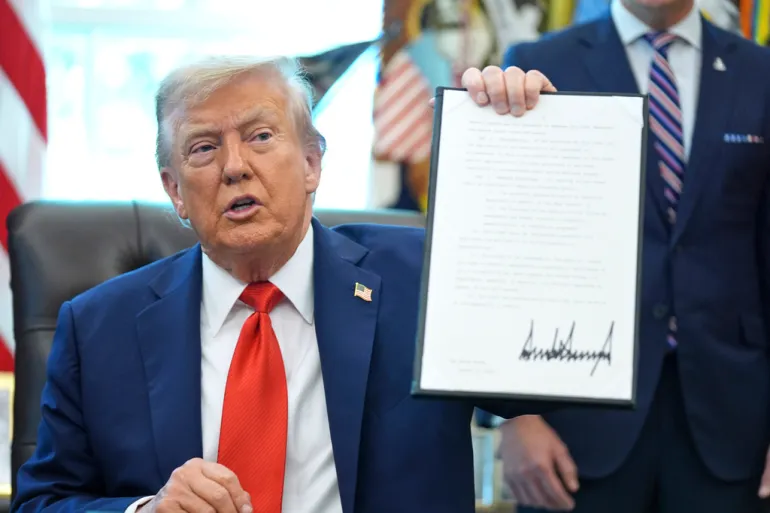
Immigration enforcement has been a defining pillar of Donald Trump’s second-term agenda since returning to office in January 2025, driving a series of policies that have significantly altered global mobility patterns and diplomatic relations. Central to this approach is a transactional foreign policy framework that prioritises American interests, often penalising countries that resist cooperation.
Among African nations, Nigeria has emerged as one of the most affected, facing a wave of visa restrictions, deportation pressures, and heightened scrutiny that have strained bilateral ties with the United States.
From early 2025, policy shifts began reshaping travel, education, and professional opportunities for Nigerians. Within hours of his inauguration, Trump signed an executive order seeking to end birthright citizenship—a move that, although blocked by US courts, triggered immediate caution from the American embassy in Nigeria. Officials warned that visa applications suspected of “birth tourism” would be denied, targeting a pathway long valued by Nigerians seeking broader global access and economic opportunities.
By April, the United States introduced stricter visa interview protocols, mandating more precise documentation to curb fraud and streamline processing. Applicants were required to present properly matched DS-160 forms, while additional in-person visits became part of the process, reflecting tightening administrative controls.
The restrictions escalated in May when the US halted new student visa interviews globally, citing plans to intensify vetting procedures, including scrutiny of applicants’ social media activity. Reports indicated that some Nigerian students were affected by sudden visa revocations, deepening uncertainty within the academic community.
In June, tensions heightened further as Nigeria was listed among countries under consideration for a potential travel ban. Although not immediately implemented, the move signalled growing diplomatic friction and placed Nigeria under pressure to meet undisclosed US security and documentation requirements.
By July, the policy direction became clearer. Nigerian applicants for student and exchange visas were instructed to make their social media profiles publicly accessible for review. Shortly after, the US reduced most non-immigrant visas for Nigerians to single-entry permits valid for just three months—down from previously generous multi-year, multiple-entry arrangements. The US cited reciprocity concerns and deficiencies in identity verification systems, visa overstay management, and data-sharing mechanisms.
Behind the scenes, diplomatic negotiations revealed deeper points of contention. Nigeria reportedly declined US requests to host asylum seekers awaiting case determinations, a process that can span several years. Additional disagreements included US demands for expanded access to Nigeria’s criminal database and proposals for simplified visa access for American citizens—conditions Nigerian authorities resisted on reciprocity grounds.
The clampdown widened in August as visa applicants were required to disclose five years of social media history, extending surveillance measures beyond students to a broader pool of travellers. By September, the administration introduced a dramatic increase in H-1B visa fees—raising costs to $100,000—potentially limiting access for skilled Nigerian professionals in sectors such as healthcare and technology.
Anti-corruption and religious freedom concerns also became instruments of visa policy. US authorities warned that individuals implicated in corruption or violations of religious rights could face targeted visa bans. By November and December, these measures evolved into formal policy positions, with US lawmakers proposing sanctions against specific Nigerian groups and individuals, alongside broader travel restrictions tied to religious freedom allegations—claims the Nigerian government consistently rejected.
The situation culminated in December 2025 when the United States placed Nigeria on a list of countries facing partial travel bans, citing security and documentation concerns. The restrictions took effect in January 2026, introducing additional hurdles, including travel bonds of up to $15,000 for certain visa applicants and limitations on entry through designated US airports.
By early 2026, the diplomatic strain persisted. Proposed visa sanctions extended to prominent Nigerian political figures, while updated US travel advisories cited worsening security conditions in parts of Nigeria. The temporary closure of visa appointments in Abuja further underscored the fragile state of relations.
Collectively, these measures illustrate a sharp recalibration of US–Nigeria engagement under Trump’s second term—one defined by stricter immigration controls, heightened security concerns, and increasingly conditional diplomacy.