



As the 2027 general election approaches, political activities across Lagos State are quietly intensifying, with aspirants and incumbents positioning themselves for what is shaping up to be a fiercely contested cycle.
Within the Lagos State House of Assembly, the early signs reflect a familiar but increasingly competitive pattern—strategic alliances, grassroots mobilisation, and rising intra-party rivalries. While multiple parties are preparing for the elections, the real battles appear to be unfolding within the All Progressives Congress (APC), which continues to dominate the Assembly. The Labour Party holds just one seat, representing Amuwo Odofin Constituency I.
Across several constituencies, investigations reveal that many lawmakers are facing their toughest challenges not from opposition parties, but from fellow APC members. What might have once been straightforward re-election bids are now evolving into high-stakes internal contests that could reshape the political landscape.
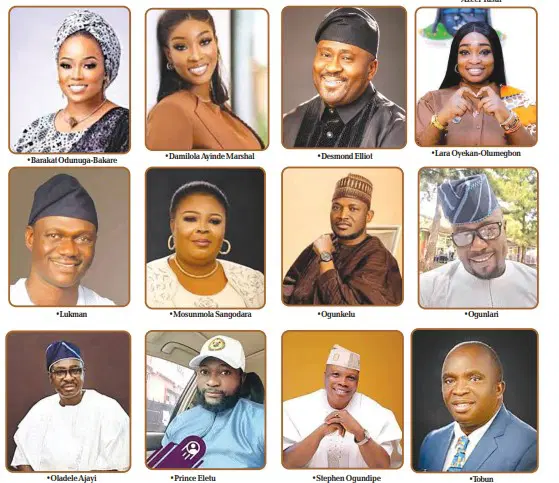
In Epe Constituency I, long-serving lawmaker Abiodun Tobun is confronting a strong challenge from former local government chairman Segun Agbaje. Agbaje’s growing popularity, driven by his grassroots engagement and community-focused initiatives, is resonating with constituents who are increasingly calling for generational change and fresh leadership ideas. There is a noticeable shift in sentiment, with some residents openly expressing fatigue with prolonged representation.
A similar scenario is unfolding in Epe Constituency II, where incumbent Ogunkelu, popularly known as Sketel, is preparing for a contest against Adeyemi Olumuyiwa Ogunlari. The race is already being framed as a battle of influence, local networks, and political structure.
In Ajeromi-Ifelodun Constituency I, the contest is taking on a more complex dimension. Incumbent Lukmon Olumoh is expected to face a challenge from former council chairman Ajifat, whose longstanding presence in Lagos politics gives him a strategic advantage. Adding further intrigue is the potential influence of Kolawole Taiwo, a former Deputy Speaker with deep electoral experience in the constituency.
Even high-ranking officials are not insulated from the growing wave of internal competition. In Agege Constituency I, Speaker Mudashiru Obasa is reportedly facing opposition from Agbelebu, highlighting the shifting dynamics within the party. In Lagos Island Constituency I, first-term lawmaker Lara Oyekan-Olumegbon is also bracing for multiple challengers, including Moshood Olawale Eletu, as pressure mounts on new entrants to consolidate their positions.
In Surulere Constituency I, Desmond Elliot appears set for a difficult re-election battle. Growing dissatisfaction among sections of the electorate has opened the field to challengers such as Barakat Odunuga-Bakare and Rasaq Olamilekan. Observers note that Elliot’s performance and grassroots connection will likely determine his political survival in what could become one of the most closely watched races.
Surulere Constituency II is also shaping into a competitive contest, with Barrister Damilola Ayinde Marshal preparing to challenge incumbent Mosunmola Sangodara.
A noticeable trend emerging across Lagos is the growing influence of youth-driven candidacies and grassroots mobilisation. In Orile-Agege Constituency II, Azeez Oladapo Yusuf is gaining traction as he prepares to challenge incumbent Abdulkareem, reflecting a broader shift toward youth participation in politics.
In Ibeju-Lekki Constituency II, Abiodun Yusuf is positioning himself against incumbent Oladele Ajayi, whose tenure has focused on infrastructure and empowerment initiatives.
Elsewhere, in Oshodi-Isolo Constituency I, Stephen Ogundipe remains a strong figure, though internal disagreements within local political structures may present challenges. Potential contenders such as Adebanji Atewogboye and Mayowa Alakija are reportedly assessing their chances.
In Apapa Constituency I, Deputy Speaker Mojisola Meranda is expected to face Mike Oladunjoye Egbayelo, marking yet another significant contest involving a ranking lawmaker.
Despite the widespread tension, a few constituencies remain relatively calm. Lawmakers such as Gbolahan Yishawu and Noheem Adams in Eti-Osa, as well as Ladi Ajomale in Oshodi-Isolo Constituency II and Orekoya, are currently perceived to have smoother paths toward re-election.
Taken together, the unfolding developments point to a shifting political reality in Lagos. Incumbency is no longer a guarantee of political survival. Instead, performance, grassroots connection, and internal party acceptance are emerging as decisive factors.
Ironically, analysts suggest that the dominance of the APC in Lagos is fueling these internal battles, as aspirants increasingly view party primaries—not the general elections—as the true battleground.
As 2027 draws closer, these intra-party rivalries are expected to intensify, reshaping alliances and redefining the balance of power within the Lagos State House of Assembly.